Russia Gifts Iran Ballistic Missiles as Putin Mourns Khamenei: Rising Alliance Raises Fears of Global Conflict
By International Desk
The geopolitical alliance between Russia and Iran is drawing global attention once again as Moscow reportedly strengthens its military cooperation with Tehran while mourning the death of Iran’s long-time Supreme Leader, Ali Khamenei. The deepening relationship between Vladimir Putin and Iran’s leadership has sparked concerns among analysts about the potential escalation of global tensions.
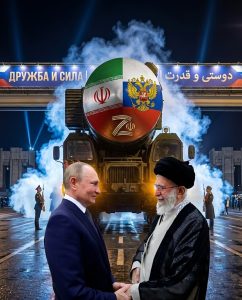
Following the assassination of Khamenei in late February 2026 during strikes in Tehran, Putin strongly condemned the attack, calling it “a cynical murder that violated all norms of human morality and international law.” The Russian president sent his condolences to Iran’s government and praised Khamenei as a statesman who played a key role in strengthening Russian-Iranian relations.
Russia and Iran have long shared strategic ties, especially in defense cooperation, energy trade, and regional security. Reports of Moscow supplying Iran with advanced ballistic missile technology have intensified concerns in Western capitals, as the partnership could reshape the balance of power in the Middle East and beyond.
The relationship between Putin and Khamenei had grown increasingly close over the past decade. Both leaders frequently presented themselves as defenders against Western influence, coordinating diplomatic and military strategies during conflicts across the Middle East and Eurasia. Their partnership culminated in a comprehensive strategic agreement aimed at strengthening cooperation in defense and economic sectors.
The geopolitical alliance between Russia and Iran is drawing global attention once again as Moscow reportedly strengthens its military cooperation with Tehran while mourning the death of Iran’s long-time Supreme Leader, Ali Khamenei. The deepening relationship between Vladimir Putin and Iran’s leadership has sparked concerns among analysts about the potential escalation of global tensions.
Following the assassination of Khamenei in late February 2026 during strikes in Tehran, Putin strongly condemned the attack, calling it “a cynical murder that violated all norms of human morality and international law.” The Russian president sent his condolences to Iran’s government and praised Khamenei as a statesman who played a key role in strengthening Russian-Iranian relations.
Russia and Iran have long shared strategic ties, especially in defense cooperation, energy trade, and regional security. Reports of Moscow supplying Iran with advanced ballistic missile technology have intensified concerns in Western capitals, as the partnership could reshape the balance of power in the Middle East and beyond.
The relationship between Putin and Khamenei had grown increasingly close over the past decade. Both leaders frequently presented themselves as defenders against Western influence, coordinating diplomatic and military strategies during conflicts across the Middle East and Eurasia. Their partnership culminated in a comprehensive strategic agreement aimed at strengthening cooperation in defense and economic sectors.
Khamenei’s death, however, has created a moment of uncertainty in Iran. Within days, leadership transitioned to his son, Mojtaba Khamenei, with Russia quickly pledging continued support for the new leadership. Moscow described Iran as a “reliable partner” in a time of growing international tensions.
The latest developments have also reignited fears of a broader international confrontation. With rising military alliances, regional conflicts, and superpower rivalries intensifying, some analysts warn that escalating tensions between global powers could increase the risk of a larger war. However, experts caution that while the situation is dangerous, it does not necessarily mean the world is on the brink of another global conflict.
Still, the strengthening bond between Moscow and Tehran—once symbolized by the close political alignment of Putin and Ayatollah Khamenei—continues to shape the geopolitical landscape. As global powers react to the shifting balance, the world watches closely to see whether diplomacy can prevail over escalation.
Khamenei’s death, however, has created a moment of uncertainty in Iran. Within days, leadership transitioned to his son, Mojtaba Khamenei, with Russia quickly pledging continued support for the new leadership. Moscow described Iran as a “reliable partner” in a time of growing international tensions. 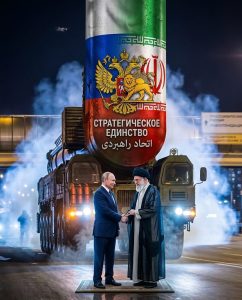
The latest developments have also reignited fears of a broader international confrontation. With rising military alliances, regional conflicts, and superpower rivalries intensifying, some analysts warn that escalating tensions between global powers could increase the risk of a larger war. However, experts caution that while the situation is dangerous, it does not necessarily mean the world is on the brink of another global conflict.
Still, the strengthening bond between Moscow and Tehran—once symbolized by the close political alignment of Putin and Ayatollah Khamenei—continues to shape the geopolitical landscape. As global powers react to the shifting balance, the world watches closely to see whether diplomacy can prevail over escalation.